
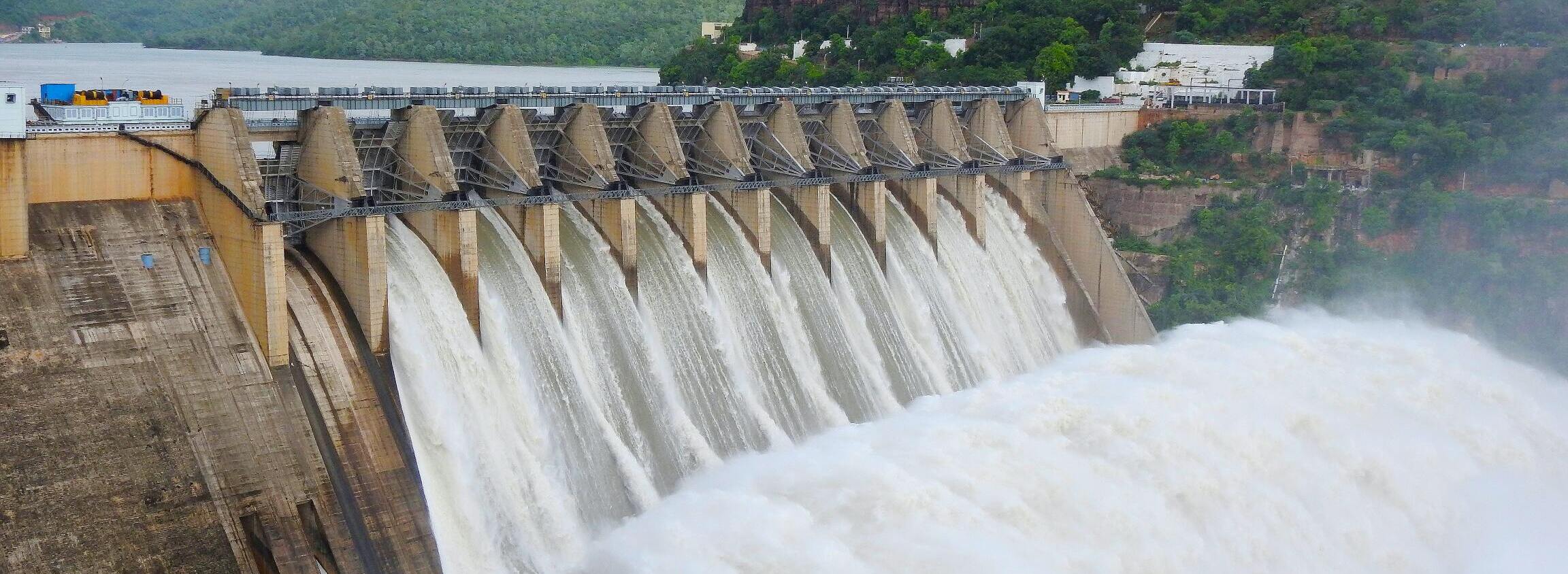
With rising concerns about carbon emissions and energy security, policymakers have expressed their faith in ambitious hydropower projects to generate clean and reliable energy for the nation. Such projects have seen wide protests due to adverse impacts, such as displacement, ecological damage, low water flow, etc. Over the last twenty years, there has also been renewed focus on the need for urban rivers to meet water quality standards. However, authorities have failed to acknowledge the complex relationship shared by hydropower projects and rivers, even while trying to address water pollution and ensure access to water. As a result, a false dichotomy has been created – that hydropower and water quality issues are to be treated distinctly, as they pursue different goals. This ignores the influence that hydropower projects have over river health, and over-emphasises few ecosystem services, creating an imbalance that threatens long-term urban access to all services. Furthermore, a failure to account for river health as a primary consideration when initially determining hydropower viability, renders any subsequent consideration, however comprehensive, ineffective. While balancing energy development and environmental issues is difficult, using river health to guide hydropower policy might prove useful in moving towards sustainable urban and natural resource management.
Introduction: Urban access to ecosystem services
Two hundred kilometres from the origin of the river Yamuna, water is diverted into the Shakti Canal.1 A number of hydropower stations can be seen on that stretch, as the river slowly moves, almost lifeless. Activists studying the impact of hydropower on the Yamuna state that the quest for power generation has sucked every drop out of the river.2 It appears that large infrastructural projects like hydropower dams have drastically decreased the effective width of the Yamuna floodplain, due to excessive obstruction, and increased the speed of water during monsoon floods.3 In addition, the construction of dams on upstream parts of the river is predicted to destroy the few untouched ecosystems around the Yamuna.4
There is widespread concern that the upcoming large Lakhwar-Vyasi  hydropower project will destroy what is left of the river and surrounding biodiversity.1 To allay fears, the NGT recently set standards to ensure minimum environmental flow in all rivers.2 Though the government appears to have acknowledged the project’s adverse effects on the ecology of the river,3 the river’s inability to self-rejuvenate, and dilute waste and industrial effluent,4 remains a pressing concern. The presence of these dams has aggravated Delhi’s water issues, further limiting access to drinking water, recreational activities, availability of fish, etc. Once known to be home to the Mahseer species of fish,5 the river serves as a sad memory of freshwater life. The loss of this lifeline to Delhi and surrounding urban areas6 could indeed have a huge impact culturally and spiritually. Similarly, dams in Pune,7 Kashmir8 and Assam,9 have been criticised for poor planning, failure to consider climate change, low electricity production, etc.
It is clear that urban rivers are important natural ecosystems. They support a range of urban needs by providing ecosystem services,10 broadly divided into four categories: provisioning services (drinking water to complement groundwater, energy generation, fisheries) regulating services (flood management, filtration); cultural services (spiritual enrichment, identity, recreation)1; and, supporting services (nutrient cycling, maintenance of wildlife habitat).2 While the first three directly benefit humans, the fourth plays a vital role in ecosystem maintenance.3
Hydropower projects located on urban rivers can either be located within urban ecosystems, or in ecosystem support areas surrounding the cities, which are often several times larger than them.1 The latter can include projects farther away from the city. Though these projects are built to provide regulating and provisioning services, they often affect urban access to other ecosystem services, with downstream consequences for humans, animals and the surrounding environment.2 As seen earlier, an interference in water flow can positively impact the potential for renewable electricity generation, agricultural viability, access to drinking water, etc.; however, it can also negatively impact environmental flow, natural flooding patterns, movement of freshwater fish, critical habitat, nutrient cycling, etc. Furthermore, a large number of species and humans depend entirely on the natural river ecosystem. When access to ecosystem services is cut off or hampered by hydropower and other human interventions like pollution, freshwater life, urban animals and livestock, as well as the urban poor and socially disadvantaged communities, are the first to bear the burden of water scarcity, with no escape.3
A failure to safeguard supporting services, coupled with the prioritisation of regulating and provisioning services, thus compromises an ecosystem’s survival and the quality of life enjoyed by its members.
Regulating water quality: A remedy-oriented framework
Despite evidence of the intimate relationship between rivers and hydropower projects, policymakers and courts have typically treated issues related to river health and energy development distinctly. Water law1 addresses the former, only some of which is relevant to the present analysis. The Water (Prevention and Control of Pollution) Act, 1974 prohibits the disposal of polluting matter in streams and wells2 to maintain or restore their ‘wholesomeness’.3 Applicable to rivers,4 it recognises the tension between natural resource protection and use. The National Water Policy, 2012 acknowledges growing water scarcity in India, and stresses the importance of sustainable and equitable water management.5 It pushes for conservation of rivers and river corridors, underscoring the crucial role that accurate scientific planning6 plays in balancing urban development against its effects on an ecosystem, including water contamination, threats to wildlife, reduced environmental flow, etc.7 Though the 1987 version determined water allocation priorities,8 the present Policy only relies on economic principles for water allocation.9
Litigation focused on urban access to water, even in damaged ecosystems like the Yamuna, has mostly been pollution-centric. In 1996, the Delhi High Court despairingly stated that, unless water in the river was made fit for human consumption, the river would only spread disease and death.1 Four years later, its water was unfit for even animal consumption.2 In 2018, the National Green Tribunal (NGT) emphasised the need for river action plans focused on enhancing water flow, to dilute pollutants and meet water quality standards.3 No attentionwas paid to the impact of hydropower generation on the river. Finally, a Monitoring Committee was set up in 2019 to ensure compliance with orders on sewage treatment and pollution control,1 to guarantee drinking water to more than a third of Delhi’s 17 million inhabitants, who rely solely on the Yamuna for such.2 All construction activity was banned on the demarcated floodplain and restoration of flow was prioritised.3 While this prohibition should ideally be applicable to dams on the Yamuna, given continued construction of big hydropower projects,4 it appears that the government interprets it differently.
Chasing growth: A development-biased framework
On the other hand, the framework for hydropower and energy development hardly grapples with river health. Determining that 70% of hydropower potential is recoverable from the Indus, Ganga and Brahmaputra river systems,1 the Policy on Hydro Power Development, 2011 has pushed for the development of large projects to facilitate low carbon growth and energy security.2 Ranked fifth in the world for a hydropower potential of 1,45,000 MW, India has 197 hydropower plants above 25 MW and 9 pumped storage stations.3 Though only 26% of total potential has been exploited,4 transmission capacity has grown sharply since 2014 with increased public spending.5 Private participation has been encouraged6 with the National Tariff Policy,7 to facilitate an addition of 175 GW by 2022 and move away from coal.1 Though the Electricity Act, 2003 recognises the importance of considering the best ultimate development of the river,2 the Policy itself makes no mention of river health, despite shaping human relationships with rivers. It only addresses rehabilitation of displaced communities to a limited extent. Despite awareness of the impacts of hydropower on ecology and communities, it appears India has reaffirmed its faith in the same.
Since 2000, litigation challenging hydropower projects has focused on many aspects, including population displacement, dam safety, adverse environmental impacts such as threats to biodiversity, loss of forest cover, change in environmental flows,1 etc. In most cases, project construction has been upheld due to benefits that dams bring, such as agricultural viability,2 flood control,3 improved living conditions (despite deprivation of cultural services),4 etc. Courts and tribunals have factored in access to water and river health to a very limited extent when analysing hydropower viability. They have either considered river health while determining the adequacy of environmental impact assessments,5 or referred to the guarantee of water under Art. 21 as one of the benefits of constructing a dam.6
The inadequacy of subsequent consideration of river health
Some space is carved out for consideration of river health in hydropower viability. Under a 2006 notification issued by the Ministry of Environment and Forests (MoEF), applicants must obtain prior environmental clearance for projects falling under Category ‘A’ (50 MW or more) and ‘B’ (25 MW – 50 MW)1 from the MoEF2 and the state authority3 respectively. The four steps in the process – screening, scoping, public consultation and appraisal,1 must be completed before beginning project construction,2 or expanding and modernising existing projects.3 However, this process has been severely criticised for the insufficiency of EIAs and the lack of effective public consultation,4 the exclusion of large capacity projects, the failure to submit half-yearly compliance reports, 5 etc.
In recent years, the NGT has repeatedly stressed the importance of accounting for the cumulative impact of hydropower generation on river basins,1 given dangers posed to the ecosystem by poor planning and overpopulation of projects.2 However, Small Hydro Projects (SHPs) under 25 MW3 and certain medium projects are exempted from the EIA process.4 ‘Small’ may only refer to the capacity of the turbine, and not necessarily to the size of the dam,5 or the scope of its impacts.6 Importantly, the government has encouraged private investment in SHPs, and seeks to add renewable capacity of 20,000 MW,7 all of which will be exempt under the 2006 Notification. Though an EIA might be required under Art. 21 for such projects based on potential impact,8 it is unlikely given the lack of enforcement. This makes it very difficult to assess the cumulative impact on a river basin when evaluating a proposed large construction, without underestimating the developmental burden on the ecosystem. Furthermore, if an EIA has considered all impacts, the relevant authority can still grant clearance unless the decision is illegal or arbitrary.1 Courts and tribunals have been reluctant to reject projects on EIA grounds,2 instead either limiting the scope of judicial review for policy reasons and deferring to administrative expertise,3 or requiring revision of the EIA.4 The Supreme Court has acknowledged the crucial role that hydropower played in turning the Alaknanda and Bhagirathi basins into ecological deserts.5 However, given the pressing need for electricity generation,6 the national energy policy’s focus on clean and reliable energy,7 and the limitations of a traditional cost-benefit analysis when accounting for environmental concerns,8 courts and tribunals appear likely to continue to rule in favour of development, unless ‘dying rivers’ with significant or irreversible damage are concerned. Unfortunately, that may be too late.
Challenging the hierarchy of ecosystem services
Two concerns are identified from the above discussion. One, the hydropower framework places excessive emphasis on regulating and provisioning services, despite grave threats to other services, making it near impossible for rivers to survive the consequences of urban development. Due to this imbalance, urban areas have, over decades, slowly drained their ecosystem support areas to meet their energy demands without engaging in effective river management. Water law appears to be unsuccessfully trying to guarantee urban access to some provisioning services for humans and animals without attacking this unsustainable hierarchy of ecosystem services and the need for balance. Sadly, both frameworks are heavily underestimating the importance of supporting services, without which none of the other services can be enjoyed. Relying on economic valuation and prioritising some ecosystem services merely because they provide economic benefits, ignores the intrinsic and indirect value of other services,1 as well as the potential long-term economic benefits of a healthy ecosystem.2
 Government measures continue to reinforce this imbalance, increasing ecosystem burdens in questionable ways. Projects, such as the Lakhwar-Vyasi dam, have been criticised for their location on upstream parts of the Yamuna river in seismically active zones (reducing dam safety; increasing environmental, ecological and habitat destruction; and severely compromising on flow)1 as well as in last remaining habitats of endangered species, without mandated assessment of cumulative impacts.2 Despite the Ministry of Environment & Forests’ acknowledgement of hydropower’s impact on loss of forest cover, water degradation, and other disasters,3 the government has repeatedly sanctioned and released funds for construction.4 At the same time, the Namami Gange Programme5 and the Yamuna River Project6 have mainly focused on the regulation and monitoring of industrial effluents, sewerage treatment and river-surface cleaning in urban areas. A major portion of their budgets has been allocated to sewage treatment, over the management of environmental flow,7 failing to adequately identify the role of hydropower in reducing flow, and destroying rivers’ self-rejuvenation and filtration capacities.
By treating these frameworks distinctly, a false dichotomy is created: energy law chases renewable energy growth and security, and water law ensures water quality standards. Unfortunately, unless both frameworks acknowledge their shared environment at a policy level, and the interfering role that hydropower plays in access to all ecosystem services, water law will remain trapped trying to fix problems that it alone cannot solve. One important barrier to such progress is that states are, for the most part, in charge of regulating water quality,1 while hydropower and energy strategies are centrally decided.2 This division assumes that states can potentially fix water quality, even when significantly deteriorated, without the involvement of the central government or a change in hydropower policy. Even if states desire to protect or restore their rivers, they may not be able to successfully challenge national priorities. Furthermore, the lack of sustained central involvement in pollution-control reduces the likelihood of formulating a comprehensive water policy, at the state level, that factors in the effects of hydropower generation. Given how inter-related hydropower and water issues are, any model that relies on the above dichotomy, or fails to incorporate collaborative policy planning, is bound to be ineffective.
Two, according subsequent consideration to potential impacts on an ecosystem in the developmental process assumes that a project should be permitted unless a wide range of aspects, one of which is river health, are significantly affected by it. Given that projects are likely being fast-tracked to meet capacity addition goals,1 EIAs will always remain secondary to energy goals, and are thus no guarantee of adequate consideration for river health. An ecologically and climate-change conscious approach should require river health to be the threshold determination for hydropower viability, thus investing in access to all ecosystem services to some extent. If a river ecosystem is damaged, no developmental activities should be allowed. A project should be able to proceed to the evaluation stage only based on positive indicators of health like water quality, balance in ecosystem services, strength of supporting services, etc. Though EIAs would still be required to limit adverse developmental impacts, energy strategies would now be subject to river health, mandatorily, acknowledging the state of the natural resource underlying the developmental need. Given the time lag between approval and construction of these projects, it is crucial that policies incorporate changing environmental awareness and allow checks at different stages of development to safeguard other ecosystem services. Where hydropower projects are not viable, cities will be forced to look to alternative energy sources, and energy efficiency and conservation measures, while their rivers heal, in order to guarantee present and future access to ecosystem services. In cities like Delhi, authorities may have to look to natural gas or solar energy, while cities with healthier rivers may have the option to engage in a more diverse energy mix. In all cases, energy choices should be dependent on the stability of an urban area’s relationship with its ecosystem support areas.
The potential for sensitive natural resource management
Over the last few decades, courts have started to explore the potential to sensitively manage natural resources for the present and the future1 using the doctrine of public trust. Adopted from American jurisprudence by Indian courts in the 1980s,2 this doctrine reaffirms the State’s duty to protect and preserve natural resources, including rivers, for public use and enjoyment, as a trustee of the public.3 Finding common ground under Art. 48A, Art. 51A and Art. 47 of the Constitution,4 and the State’s duties towards humans, animals and the environment, courts have strongly asserted the need to stop activities that aggravate ecological damage or urban pollution of rivers and water sources. As access to clean water is essential to human survival under Art. 21,5 public health6 and the right to a healthy environment7 have been identified as important reasons to change the manner in which natural resources are used. The need to prioritise drinking water8 has been reasserted to ensure that the quality of people’s lives does not decrease due to pollution and mismanagement by a few.9 Courts have also highlighted the tension between economic development and preservation of water resources has been highlighted,1 along with the need for a just balance between the two.2
Noting the ‘mushrooming’ of hydropower projects and their contribution to degradation of river basins,1 the Supreme Court recently prohibited the grant of environmental clearances to new hydropower projects2 using protectionist language that echoes the public trust doctrine.3 Where energy and water law frameworks falter, and as long as policymakers fail to invest in comprehensive natural resource management, this doctrine might be the best shot at challenging urban areas’ relationships with ecosystem support areas and guaranteeing urban access to ecosystem services. It acknowledges the need for management consistent with the nature of the underlying resource, in a way that the other frameworks do not. An analysis of hydropower viability under this will, in all probability, examine river health first, which could invert the bias in favour of development. As direct evidence of significant ecological damage may not always be necessary, construction could be denied even on reasonable suspicion of harm.4 The government would need to fulfil a more demanding obligation when evaluating the development of river valleys – a general public benefit justification may not prove sufficient,5 given changing social priorities.6 Crucially, any such proposal would require a high degree of judicial scrutiny, regardless of compliance with existing legislations.7
This approach is a challenge to the cost-benefit analysis and scientific approach underlying the EIA process and the weight given to different factors. It critically questions the government’s energy goals and growth trajectory,1 by placing renewed emphasis on equitable and sustainable water management. In such a framework, an EIA could be eterminative, and help increase the effectiveness of pollution-control measures by prioritising the health of the ecosystem and the river. However, relying excessively on American approaches to natural resource management is risky as water-related environmental struggles in India are very different in immediacy and scale. In order to understand the doctrine’s potential in the preservation of ecosystem services, it is crucial to situate it in the urgency of the Indian context – where scarcity and mismanagement walk hand in hand, and where millions still rely on dying rivers.